About Me
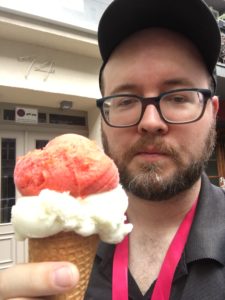
My name is Will Riley. I am a …
- Curious and analytical person (Educational and Moral Psychologist, Philosopher, Researcher)
- Empathetic and motivational person (Coach, Teacher)
- Creative and expressive person (Software Designer, Writer)
- Spiritual and reflective person (Universalist Quaker Friar, Poet)
- Neurodivergent person
- Family and friend person (Husband, Father, Son, Brother, Uncle, Nephew, Cousin, Friend)
My General Perspective
- My family and friends fill my heart with love.
- I enjoy meeting people and care about those I am lucky to meet.
- The vast suffering in this world is heart-breaking, so I try to understand how our moral minds perceive and influence it.
- I wish everyone a joyful life, free from suffering.
- I endeavor to be gentle with myself and others, and encourage others to do the same.
Coaching & Advising
I am currently exploring coaching and advising roles, such as academic support coach or educational advisor, where I can help current, former, or future university students navigate their academic experiences.
Given my background in educational and moral psychology, along with my own eclectic and challenging academic journey, I am especially interested in supporting people as they reflect on and align their intellectual, moral, and vocational identities.
Given that I identify as a neurodivergent person, have many close neurodivergent friends and family members, and have some experience working with neurodivergent people, I am also interested in coaching and advising neurodivergent people.
Teaching
I am also currently exploring teaching roles where I can introduce students to educational psychology, moral psychology, and ethics.
Quaker Ministry
I am a universalist Quaker friar who feels called to help people learn how to be gentle with themselves and others.
My spiritual practice involves daily silent worship, contemplative study, and showing people that I care about them. It also involves periodically writing articles and poetry.
Current Employment
I currently work as a Researcher & Research Software Engineer at Wageningen University & Research, where my contributions have centered on designing research software and training researchers in how to do the same. In this position, I am trying to help society by generating scientific knowledge in an ethical manner and for prosocial purposes.
Academic and Professional Background
My primary academic expertise is in educational and moral psychology, especially moral motivation. I also have some expertise in the human-centered design and humanistic critique of digital media, including political, educational and research software.
I graduated with a Ph.D. in Educational Psychology (Applied Cognition and Development) from the University of Georgia. My dissertation research examined how people make moral judgments about consumer behaviors, like eating meat and using plastic straws, which indirectly harm animals, and whether beliefs about the minds of animals influences those judgments. Specifically, I tested whether attributing mental capacities to animals increases our moral concern for harming them and our motivation to stop harming them. My advisor was Dr. Leonard Martin.
I also have a M.S. in Digital Media from the Georgia Institute of Technology, and a B.A. in Philosophy from Reed College. In addition, I’ve completed undergraduate and graduate coursework in psychology, informatics, statistics, public health, and literature from the University of Michigan, George Mason University, Portland State University, University of North Dakota, and Georgia State University.
Most of my professional life has involved designing educational or research software in academia and industry. During my doctoral training, I also worked as a university instructor. In both for-profit and non-profit organizations, I have helped train and mentor junior software developers.
You can find more information about my academic and professional background on LinkedIn.